
Towing a Car With No Keys in Orlando: How It Actually Works
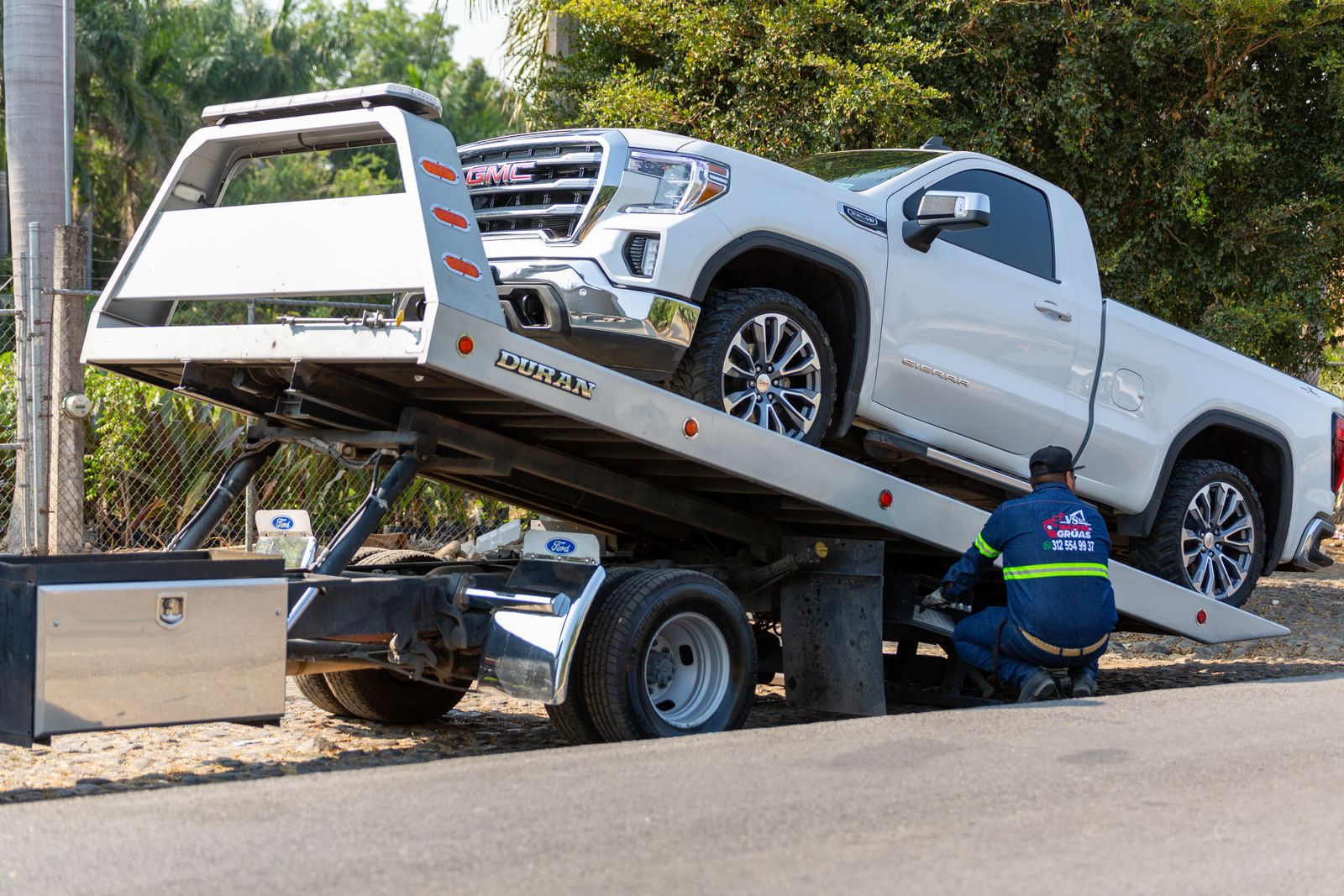
A car sits in the corner of an apartment lot off Semoran Boulevard with a dead fob, a snapped key, or an owner three states away holding the only spare. The driver who arrives cannot open the door, turn the wheel, or pull the shifter out of Park. Towing a car with no keys is ordinary work, but it is not a breakdown tow: the vehicle has to move without ever being put in neutral, and someone has to establish who may authorize moving it. Those two halves, the mechanical one and the paperwork one, set how long the job takes.
Key Takeaways
- A car with no keys usually has a locked steering column and a shifter that will not leave Park, so it can neither be rolled nor aimed by hand.
- Nissan's owner documentation states that if the battery is discharged completely, the steering wheel cannot be unlocked.
- Electronic parking brakes are electric: Kia's manual notes that when battery charge is not sufficient, the brake may not be applied or released.
- A flatbed with a winch, wheel skates and dollies is what moves a vehicle that will not roll straight or steer at all.
- In Florida, a certificate of title in either electronic or paper form is the proof of ownership of a vehicle.
- Florida law lets the owner, a property owner or lessor, a landlord, or a law enforcement agency instruct a towing business to remove a vehicle.
A Car With No Keys Cannot Be Steered or Shifted
Two separate locks stand between a keyless car and the deck of a tow truck: the steering column lock and the transmission shift interlock. The column lock drops into place once the ignition is off and the key is gone, pinning the front wheels wherever they were pointing, often turned toward a curb. On nearly every automatic built in the last three decades the shift lever will not leave Park unless the ignition is live and the brake pedal is down, and with no key neither condition can be met.
Manufacturer documentation is blunt about what a flat battery does to both. Nissan's guidance on the shift lock release says that if the battery charge is low or discharged, the shift lever may not move from the P position, and for keyless models adds that if the battery is discharged completely, the steering wheel cannot be unlocked. It also tells drivers not to move the vehicle while the steering wheel is locked. A car in that state cannot be steered, cannot be shifted, and will not track straight if anything pulls on it.
Electronic Parking Brakes and Push-Button Shifters Need Power to Let Go
Modern parking brakes are motors, and motors need voltage. On a vehicle with an electronic parking brake there is no cable and no lever: a small actuator at each rear caliper clamps the brake, and only an electrical signal releases it. Kia's owner's manual states that when the battery charge is not sufficient, the electronic parking brake may not be applied or released, and directs the owner to connect to the 12-volt auxiliary battery. With no key and no charge, the rear wheels stay clamped.
Push-button and rotary shifters behave the same way. They are switches, not linkages, so there is no mechanical path from the button to the transmission. The result is a vehicle with two locked wheels and a locked column, which cannot roll onto a deck on its own tires and cannot be steered while a winch pulls on it.
Locked Doors Change the Job Before the Truck Arrives
Doors that will not open remove every in-cabin workaround at once. The shift lock release slot is in the center console, the parking brake switch on the console or dash, and neutral itself inside the car. With the cabin sealed, a tow operator plans the job around the vehicle rather than through it: moving a car is a towing job, and opening one is a separate trade with its own authorization. Nothing inside can be checked either, so the car is treated as locked in Park with the brake set.
A Flatbed Moves a Car That Will Not Roll or Steer
A flatbed is the standard answer for a keyless vehicle because it is the only common method that does not ask the car to participate. The deck tilts, the winch takes the car up it, and every wheel rides off the pavement, so a clamped rear brake and a locked column stop mattering once it is aboard. Getting it aboard is the part that takes gear: wheel skates and dollies slide under tires that will not turn and give the car temporary rolling wheels.
The winch behaves differently on a car that cannot steer. A cable pulls a vehicle wherever the line points, and a locked column means nobody corrects the path mid-pull, so the approach is squared up and the route onto the deck cleared before the cable is attached. A side pull needs a snatch block to redirect the line rather than a driver hauling the car sideways. That is the everyday argument for flatbed towing over a wheel-lift here: a wheel lift leaves two wheels rolling on the road, and on this vehicle those may be the two that will not roll.
Keys gone, shifter stuck in Park, doors that will not open? Tell Towing Orlando Service what the car will and will not do, and the deck, skates and winch gear get matched to it.
Call (407) 250-8672A car with a locked steering column should not be pushed or dragged to reposition it. Nissan's guidance tells drivers not to move a vehicle while the steering wheel is locked, and a car that cannot be steered under load leaves a straight line fast.
Florida Decides Who Can Authorize the Tow
Authorization comes from a short list of people, and standing next to the car is not on it. Florida's towing and storage lien statute, section 713.78 of the Florida Statutes, ties a towing company's lien to instructions from specific parties: the owner, the owner or lessor of the property where a vehicle is wrongfully parked or a person they authorize, a landlord, or any law enforcement agency. A neighbor or a buyer who has not taken title is not on that list.
What proves ownership is equally specific. The Florida Department of Highway Safety and Motor Vehicles states that a certificate of title in either electronic or paper form is the proof of ownership of a vehicle. On a keyless car that paperwork carries the weight a key would otherwise carry, since nobody can demonstrate control by opening or starting it. The same statute governs the other end: a provider releases the vehicle to the owner, lienholder, or agent, and an agent's authority must be shown through an original writing acknowledged by the owner before a notary public.
Where the Car Sits in Orange County Changes the Approach
The location decides the equipment as much as the car does. The City of Orlando's garage directory lists downtown facilities including the 55W Garage on West Pine Street, the Administration Center Garage on Liberty Avenue, the Amelia Street Garage on George Stuart Place and the Central Boulevard Garage on West Central Boulevard. A vehicle that cannot steer inside a helical ramp comes out on skates, because there is no room to square up a long straight winch pull between concrete columns and a spiral wall.
An expressway shoulder is the opposite problem. On Central Florida Expressway Authority toll roads such as State Road 408 through downtown and State Road 528 out toward the airport there is usually straight shoulder to work with, but the car sits beside live traffic and clearing the lane comes first, which is where emergency towing and a keyless vehicle overlap badly. Apartment and retail lots across Orange County are the reverse: the mechanics are easy and the slow part is reaching whoever can authorize the move.
What to Have Ready Before Calling About a Car With No Keys
Describing the vehicle accurately shortens the call more than anything else. Have these ready:
- Whether the car is locked, and whether any door, trunk or frunk will open.
- Whether the key is lost, broken, locked inside, or held by someone absent.
- Whether the vehicle has an electronic parking brake or a push-button shifter.
- Whether the battery is dead, and whether any dash light or interior lamp still comes on.
- Whether the front wheels are turned, and how much clear straight space sits behind the car.
- Who owns the vehicle, and whether the title or a notarized authorization is available.
What Settles Whether the Car Moves Today
What settles whether a keyless car moves today is rarely the truck. It is two questions answered before dispatch: will the wheels turn, and can someone prove the right to have it moved. Check the wheels first, because a clamped electronic parking brake or a locked column turns a routine load into a skates-and-dollies job. Then find the title or notarized authorization, since a keyless car cannot be claimed by showing you can start it. Sorting out both before the first call is usually the difference between one visit and two.
When a vehicle will not unlock or shift and has to come off a garage level or a shoulder, that is the point to hand it over. Towing Orlando Service runs flatbed towing and emergency towing across Orlando and Orange County, and a clear description of what the car will and will not do is what gets the right truck loaded.